Eighteen months ago, most of the CPOs I spoke with were thinking about AI as something their team was experimenting with. Today, those same CPOs are realising AI isn't a series of experiments any more. It's in their products. It's in the experience their customers are having. And it's in their lap.
That shift - from "we're piloting some AI" to "AI is shipping in our products and I'm the one accountable for it" - has happened faster than the role has adjusted to.
I want to talk about what that means, because I think a lot of product leaders are feeling something they haven't quite named yet. It helps to name it.
Three things have changed at once
-
The first is that AI moved out of innovation labs and into production. Not because anyone made a strategic decision to put it there, but because the tools got good enough that engineering teams started building with them. Copilots, agents, embedded models - they're not pilot projects any more, they're features in shipping products. And the moment something is in a shipping product, it's the CPO's responsibility.
-
The second is that build velocity has collapsed. When our CTO Stephen presents at AWS Summit Sydney on the 14 May, 2026, he will highlight what AI-driven development makes possible: a four-to-six week major feature compressed into 48 hours of production-ready code. That sounds like good news - and operationally, it is - but it has a hidden consequence. The governance gates that worked when releases were quarterly don't work when releases are hourly. Either teams route around them, or the gates become so burdensome that velocity is killed. Most product leaders I know are quietly watching one of those two things happen and aren't sure which is worse.
-
The third is that boards and regulators have started paying attention. In Australia, the Guidance for AI Adopters now sets out lifecycle expectations. The AI Safety Institute is operational. The AICD has published a Director's Guide to AI Governance. Globally, the EU AI Act is in force and the regulatory machinery is moving in one direction across every market that matters.
What this combination produces is a CPO whose product surface includes AI, whose governance model wasn't designed for it, and whose accountability has been formalised into law and director duty.
The job description didn't update
Here's the part I find genuinely difficult: nobody sent the CPO a memo saying "your job has changed."
What there has been is a steady accumulation of expectations - from the CEO, from the board, from legal, from customers - that the CPO has the answer when something goes wrong with an AI feature. Sometimes the CPO has built the muscle to answer. Often they haven't, because nobody told them they needed to.
I talk to product leaders who can show me a beautiful AI strategy deck and a thin, brittle governance reality underneath it. The strategy says "we're an AI-first product organisation." The reality is that nobody can answer the question: "how do you know your AI is behaving as intended in production right now?"
That gap between the strategy and the reality is where the new accountability lives.
What I'd encourage CPOs to do this quarter
I'm not going to pretend there's a five-minute answer to a structural shift in the role. There isn't. But there are a few things I think every CPO should do right now, regardless of what they end up adopting longer term.
Audit what AI is actually shipping in your products. Not what's on the roadmap - what's in production. You may be surprised. Some of it may have shipped without you fully realising.
Find out who's accountable for each one. Not at the policy level - at the "if it breaks at 3am, who gets the call" level. If you can't draw a clear line from any AI feature to a named human, that's the first gap.
Have a single honest conversation with your engineering counterpart about velocity versus oversight. What's actually happening with governance gates in practice? What's being skipped? What's slowing teams down for no reason? Don't make it an argument. Make it a diagnosis.
And then - this is the part most product organisations miss - start treating AI as a governed product category rather than a feature your team happens to be using. That framing alone changes the kinds of decisions you make about it.
The governance gap is closeable - but only if you start.
The role has changed. The regulatory environment has formalised it. The technology has accelerated it. And the organisations pulling ahead are the ones treating this not as a compliance exercise but as a strategic capability - building governance infrastructure that runs at the same speed as their development process.
A note
I've spent the last few months building a practical 7-step playbook for CPOs on exactly this. It covers how to establish portfolio visibility, assign full lifecycle cost, build regulatory alignment in from inception, audit your shadow portfolio, implement continuous health monitoring, build a decommission practice, and govern for portfolio coherence - not just individual It's coming out this week.
In the meantime, if any of the above resonates uncomfortably - that's the point. The role has changed. The work is to update the muscle to match.
Ready to assess your governance maturity?
Contact Skyjed for a complimentary Product Lifecycle Governance Maturity Assessment with a customised scorecard to:
- Benchmark maturity across four critical dimensions
- Identify where gaps are costing competitive advantage
- Map quick wins that unlock immediate value
About Skyjed
Watch our 30 second Skyjed Overview video here
Skyjed’s AI-powered end-to-end lifecycle and governance platform is mission control for lifecycle management and governance. Bringing together every data point across your portfolio and lifecycle into a single source of truth, it gives our clients a new perspective to make more strategic lifecycle decisions to launch, monitor, optimise, and win.
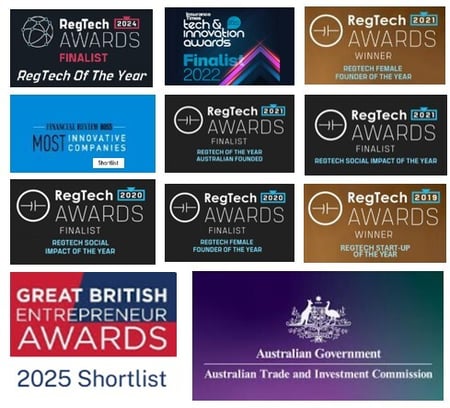
Our industry-leading platform has received numerous awards and recognition from clients and industry bodies, demonstrating our commitment to innovation and excellence.